Agricycle Animal Health Features and Benefits
Agricycle is a unique biological catalytic remediation system developed to reduce emissions of various toxic gases such as hydrogen sulfide, ammonia, and volatile fatty acids that cause noxious odors produced by putrefactive bacteria. The action of these bacteria on build-up of biomass solids, greases, and oils create serious environmental problems in animal confinement facilities, waste water treatment plants, paper mill operations, and other industries processing organic solid and liquid waste.
Agricycle acts as a two component system that utilizes a powerful enzymatic catalyst and a robust microbial formulation. This synergy forms a very potent tool to combat odors and accumulation of residual matter in a wide variety of industries producing large quantities of biomass waste.
Agricycle is a highly evolved formulation containing over 100 enzymes from diverse enzyme families. This unique technology is distinct from other "stressed bacteria" products, which rely solely on microbes to produce enzymes. "Stressed" bacteria products begins feeding when introduced into a food source (organic waste), and soon cease to produce their extracellular enzymes.
Several cost benefits have been demonstrated with Agricycle including increases in animal health, reduction of mortality, and shorter cycle time. Agricycle is an essential tool for any animal manure management program.
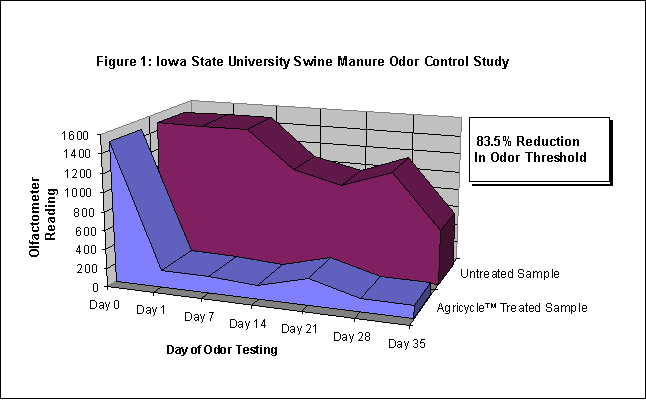
Agricycle Reduced Odor 83.5% in Tests at Iowa State University
In 1995 the Iowa State University of Science and Technology, Department of Agricultural and Biosystems Engineering conducted a 35-day study of the ability of Agricycle to reduce odors from fresh hog manure.
The odor threshold level of the Agricycle-treated manure was reduced an average of 83.5% during the test and 91% at the end of the test period. Agricycle treatment also reduced the levels of volatile fatty acids, chemical and biological oxygen demand, total solids, and increased ammonia nitrogen.
Agricycle Reduced Ammonia 86% at Sandi Leigh Farms
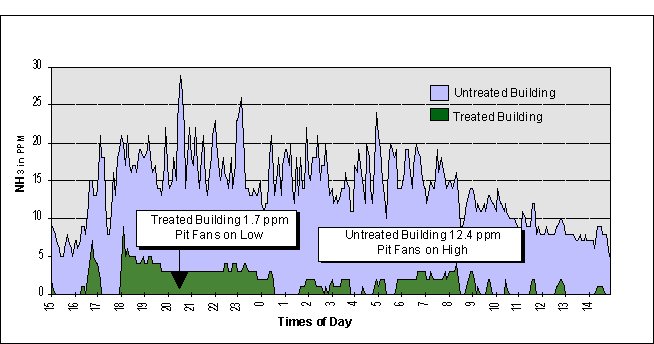
Figure 2: Shows two typical 24-hour periods reflecting ammonia readings from the deep pit grower building both before and after treatment with Agricycle.
Agricycle treatment reduced ammonia levels in animal confinement buildings by 86%. Ammonia readings were collected from a 24’ x 248’ hog production grower facility, containing approximately 920 150-pound hogs. The five-foot deep pit underneath the building contained 133,500 gallons of manure. The monitor was placed at animal nose level above the slats in the center of the building. Gas levels were recorded at five-minute intervals several weeks before and after treatment.
The above difference is actually more dramatic than indicated in Figure 2. Under both pre-treatment and post-treatment data collection periods the buildings were completely closed (automatic curtains were up) for all except short periods in the late afternoon. However, the exhaust fans drawing gases from the pits underneath the building were running at high speed during pre-treatment, but during the treatment trial were turned down to their lowest speed.
The reduction in volatile ammonia, combined with Agricycle’s control of poisonous hydrogen-sulfur compound gases provides health benefits for animals and employees as well as eliminating noxious odors that often irritate neighbors.
Agricycle treatment is not just effective for control of volatile ammonia. A trial in a large Virginia municipal wastewater treatment system demonstrated that Agricycle was equally effective in controlling release of hydrogen sulfide and volatile mercaptans. These compounds, in addition to being extremely toxic, form sulfuric acid when in contact with water and are a major source of corrosion in confinement buildings.
According to Duke University researcher Susan Schiffman, there are 150 different and sometimes toxic gases released from hog manure, and many of these gases are noxious or toxic at levels of several parts per billion. Agricycle treatment controls the release of many of these gases generated by hog waste.
Hydrogen Sulfide Reduction at a Wastewater Treatment Plant
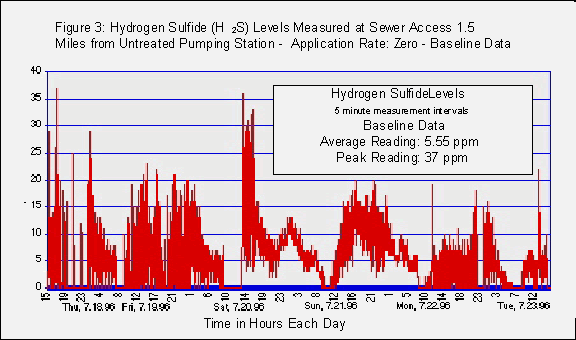
Figure 3: Shows initial baseline hydrogen sulfide levels prior to treatment. Data suggest that control of hydrogen sulfide release took approximately fifteen hours from time of initial application at the rate of 500,000:1.
The ability of Agricycle to reduce force main hydrogen sulfide (H2S) generation was tested during the summer of 1996. Data were collected at a pumping station
approximately 500,000 gallon per day (gpd) average flow. Resident complaints had been made in response to hydrogen sulfide release from several manholes
approximately 1.5 miles east of the pumping station just beyond the summit of the force main.
A three-gpd variable delivery metering pump and 15 gallon tank was installed at the station. Product was introduced at the point of influent entry before the comminuter. Exact detention time was not available, but was estimated to be approximately eight hours between influent entry at the pump station to arrival at the test manhole. An Industrial Scientific STX70 Hygiene Recording H2S detector was placed in the test manhole 1.5 miles from the pump station at approximately two feet above sewage flow. The detector was set to sample H2S levels at five-minute intervals.
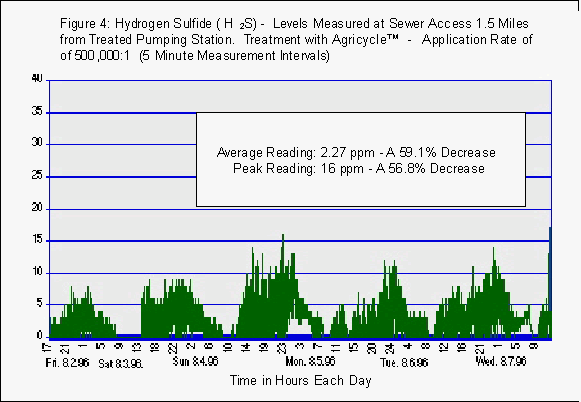
Figure 4: Shows hydrogen sulfide readings for the application rate of 500,000:1. When ACE was applied at the rate of 500,000:1, or 1 gpd, hydrogen sulfide release averaged 2.27 ppm with a peak of 17 ppm. Baseline data were collected for a period of six days prior to introduction of Agricycle. Product was introduced at the rate of two gpd or 250,000:1, for a period of six days. Product flow was reduced to one gpd or 500,000:1 for an additional six days.
This study demonstrates that Agricycle treatment is capable of effectively reducing hydrogen sulfide release in sewage handling systems under conditions of low concentrations and minimal retention time.
Figure 5: Shows hydrogen sulfide readings for an application rate of 250,000:1. Hydrogen sulfide release was reduced in this condition from the baseline average of 5.55 ppm and a peak of 37 ppm to an average of 1.42 ppm with a peak of 16 ppm. Weather conditions, including rainfall, were roughly similar but not equivalent for the control and two test periods.
Animal Manure: Reduced Contamination, Increased Fertilizer Value
Agricycle’s ability to convert ammonia to the NH4+ form is important for both health and environmental reasons and is unique among the products and technologies available to the intensive farming industry. The catalytic chemistry of Agricycle technology virtually halts the release of volatile ammonia into confinement buildings and the atmosphere. This reaction results in the significant increase of first-year available fertilizer in the soils, which reduces the risk of nitrogen and phosphorus contamination in the soils, groundwater, water supplies, and rivers. Both producers and environmentalists have asked whether the Agricycle treatment increases in ammonia nitrogen result in an increase in the undesirable non-ammoniated nitrogen that contaminates water supplies.
This relative increase in ammonia nitrogen is also well demonstrated by showing the amount of ammonia nitrogen conserved in comparison to the retention of other nitrogen compounds that make up the Total Nitrogen (TKN) measure.
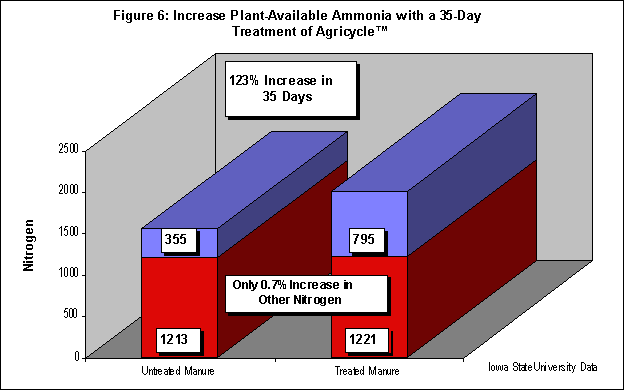
Figure 6: Shows data from Iowa State University which clearly demonstrate that nitrites, nitrates, and other nitrogen components do not increase with the addition of Agricycle treatments.
By increasing the
levels of non-toxic NH4+, also known as "aqua-
ammonia", Agricycle treated manure has an increased
fertilizer value that has first-year availability to crops.
Retaining NH4+ facilitates the process of ammoniation
within manure storage facilities. This process also limits the
formation of
non-ammoniated nitrates, which are of primary environmental
concern.
Conversion of nitrogen and phosphorus to usable fertilizer salts occurs when virtually any grade of phosphate or super phosphate (P2O5) is brought into contact with NH4+. The NH4+ reacts almost immediately with any free acid and acidic phosphates present. This process is known as ammoniation. For the ammoniation process to take place, the level of NH4+ must reach a threshold concentration high enough for nitrogen, sulfates and phosphates to be converted into soluble fertilizer. This is accomplished successfully when Agricycle treatment converts volatile ammonia (NH3) to liquid ammonium (NH4+).
In lagoons and conventional deep pits without Agricycle treatment, most of the ammonia goes to atmosphere as NH3. Without the higher levels of NH4+ the ammoniation process does not take place, minimizing the fertilizer value of conventional untreated waste since there is not a proper balance of the nitrogen, phosphorus, and potassium (N•P•K). Untreated manure can only be used effectively with nitrogen-fixing legumes such as soybeans. With other crops the farmer must add expensive commercial fertilizer which can cost up to $9-15 per acre.
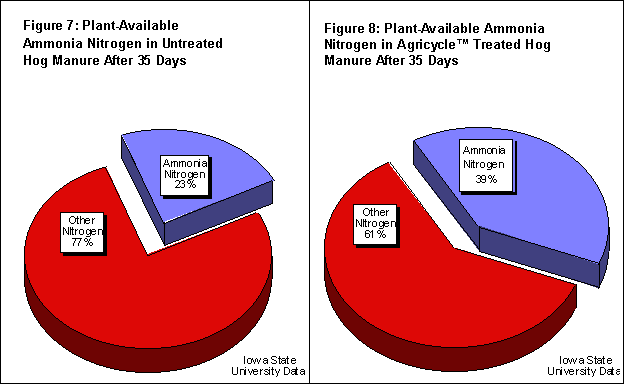
Figures 7 & 8: Show the significant increase in retained ammonia nitrogen caused by treatment of hog manure with Agricycle products after only 35 days in a study conducted by the Iowa State University of Science and Technology Department of Agricultural and Biosystems Engineering.
Continuing research is being conducted with Agricycle at the Sandi Leigh Farm. Agricycle converted volatile ammonia to harmless, nontoxic ammonium, consistent with Iowa State University data. The Agricycle test was with 260,000 gallons of hog manure from the deep pits of grower and finisher buildings at the Sandi Leigh farm. Treatment was begun in October of 1996 and samples were drawn and analyzed in May of 1997.
When combined with NH4+, the ammoniated nitrates tend to leach less when applied to fields since the crop plants readily utilize this nitrogen. Ammoniated nitrates are non-toxic. Field applications of the treated manure show that the material can be almost completely utilized by the plants in the first season. Without the NH4+ availability, manure spread onto crop land has little available nitrogen and the nitrates and phosphates are often in an insoluble form that is not readily available to plants.
Non-ammoniated nitrates pose a particular threat and can be quite harmful since they can leach into the soil and aquifers in the form of nitrate-nitrogen. This chemical is known to be toxic and in some cases fatal to human infants, causing Methemoglobinemia, commonly known as "blue-baby syndrome." Water supplies from shallow wells are especially at risk if they are close to lagoons or down grade from fields spread with conventional untreated manure.
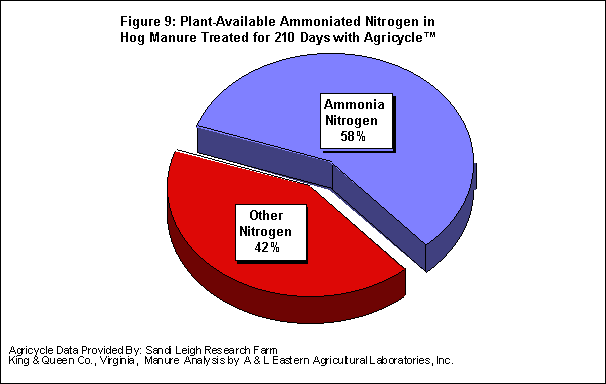
Figure 9: Shows a much greater increase than did the Iowa State test in retained nontoxic ammonium after approximately seven months treatment of hog manure under actual field conditions in deep pit grower and finisher buildings.
Non-ammoniated phosphates are in a form that strongly binds with iron and zinc, which are almost always present in the soil, to form insoluble salts. The net effect is to create a hard and crusted soil layer after manure is spread. There is typically enough soft metal in the manure to also bind with the phosphates to produce build-up of insoluble metal salts in the recirculating pipes of facilities using recharging systems for manure handling. Agricycle treatment helps to minimize both of these undesirable outcomes by facilitating ammoniation.
In order to form first year available fertilizer salts, the nitrogen to phosphorus (N: P) ratio must approach 3.5:1. Otherwise, these elements do not readily form available fertilizer and are at risk to leach into groundwater, water supplies, lakes, rivers, and marine waters. As shown below, untreated manure has very low fertilizer value, while Agricycle technology causes the N: P ratio to very closely approach the ideal of 3.5:1
The addition of small amounts of very inexpensive calcium sulfate is recommended when treating animal manure with Agricycle. When present with sufficient NH4+, gypsum (calcium sulfate, CaSO2 :H2O) enters into the reactions of the ammoniation process and combines to form fertilizer compounds such as ammonium sulfate (NH4)2SO4), monoammonium phosphate (NH4H2PO4), and dicalcium phosphate (CaH2PO2O7). Some modest amount of diammonium phosphate ((NH4)2H2PO4) may be formed, but the higher acid concentrations needed to form this compound are generally not present in animal manure. All of these compounds are desirable, soluble, and plant-available fertilizers.
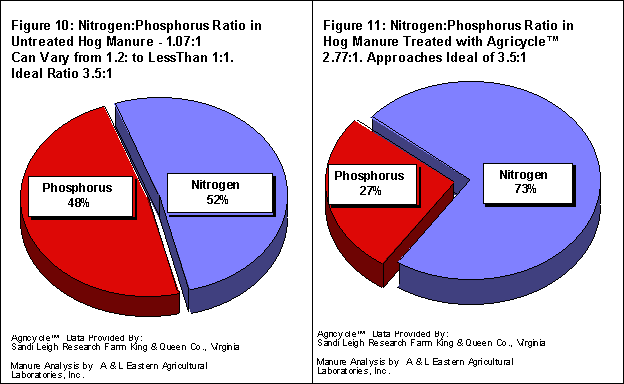
Figures 10 &11: Show the ratios of Nitrogen to Phosphorus in both untreated manure and manure treated with Agricycle
Crop Yields Increased
The first yields from the Sandi Leigh research farm very strongly indicate that the crops in fact, as laboratory results suggest, take up the nitrogen and phosphorus. When this happens, the nitrogen and phosphorus that otherwise could cause contamination stay in the natural food cycle instead of in the soil. When harvested crops take up contaminants they are no longer present in the soil to leach into our waters.
As seen in Figure 12, Agricycle-treated manure was spread on the field beginning in November 1996. This year (1996) was previously the best yield in four years on this field, which had untreated manure spread on it during each of those years. No other likely causes other than the increase in available fertilizer produced by Agricycle logically explain this 62% increase in the first cut yield. While 1996 was a very good year for crops with good rainfall, 1997 was a very poor rainfall year. The total yield from the field in 1996 was 110 bales from three cuts. In spite of the very poor rainfall in 1997, two cuts from this field have already yielded 111 bales with the third cut still to come.
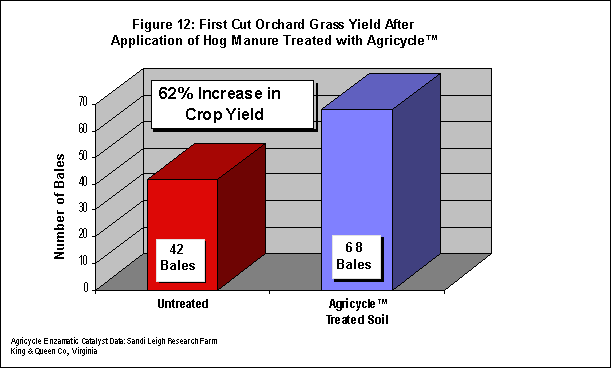
Figure 12: Shows a very striking 62% increase in crop yield from 1996 to 1997 on a field of orchard grass, sold as hay for horses.
Animal Health Increased, Mortality Reduced
Hog Confinement:
Does all this chemistry mean something? The owners of the Sandi Leigh Farm think so. They report that hogs are finishing at least 10 days sooner with Agricycle treatment. Redeye, coughs and sniffles in the animals, common indicators of high building gas levels, are nonexistent. Mortality is down to 0.44% for this grower-finisher (50 pounds to market at 250-260 pounds) operation. The owners of Sandi Leigh Farms, Eddy and Mark Berry, exercise exceptional farm management and are supplied with high quality hogs by Carroll’s Foods. Nevertheless, according to the National Hog Farmer (May 15, 1997, pp. 64-66) the industry average mortality is 5.22% for low-loss grower to finish production.
Dairy Cattle:
Recently a 350-head Virginia dairy operation sought a solution to ruinous mortality in their calving barn. The operation was losing one or two calves per day and had a very serious fly and maggot infestation in the barn. Cleaning the barn had not helped, and the veterinarian was unable to provide a solution. Fly sprays were essentially ineffective. Ammonia levels in the barn were high. After Agricycle treatment, calf loss stopped immediately, as did the maggot infestation. Ammonia levels dropped to zero.
Control of Pest and Pathogen Infestation:
The control of the maggot infestation should be of great interest to farmers. While we continue to seek opportunities for independent research, data suggest that Agricycle mitigates against a range of pathogens, including coliforms (for example, E. coli). Several of the bacilli in Agricycle were selected specifically to compete against E. coli and salmonella. Control of fly populations has been noticed in several situations. Most fly species are not attracted to waste treated with Agricycle. Flies tend not to lay their eggs on urine-soaked straw, such as from horse stalls treated with Agricycle. It has also been observed that in some cases fly larvae hatched on Agricycle-treated waste did not mature. They were not killed; they simply did not mature. Enzymes contained in Agricycle may serve to interrupt or alter one of the trigger enzymes that allow the larvae to mature to adult flies. At the dairy farm an entire generation of fly larvae was arrested.
Poultry Operations:
Research in poultry production is indicative of production gains to be realized by the animal producer. Agricycle was used in a trial in a two-house turkey confinement producer in Iowa. One building was left untreated while the other was treated with Agricycle. Treatment with Agricycle took place only once, immediately prior to introduction of the birds and two weeks after the production cycle began. During tilling, odors in the Agricycle treated building were reported to be more like silage than ammonia. One-half hour after tilling, the ammonia level in the Agricycle treated building averaged only 15 parts per million, while in the untreated building the ammonia averaged 85 parts per million.
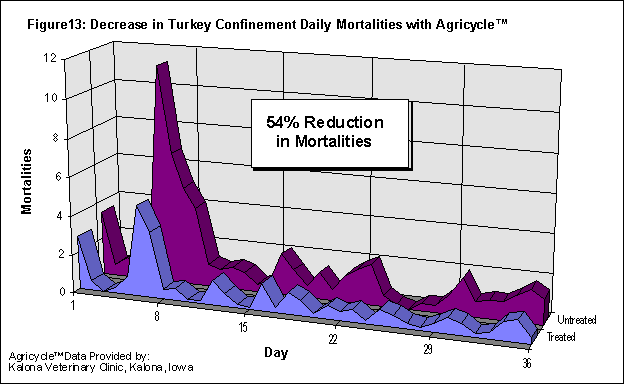
Figure 13: Shows a striking 54% reduction in mortalities in the treated building during the first five weeks of production. Losses were cut 54% compared to the untreated building. This two to one difference is reported by the producer to have held for the entire 18-week growth cycle.
Conclusion and Summary
Agricycle: Reduces ammonia, hydrogen sulfide and many other gases present in animal manure. Animal health increases mortality decreases and profits go up.
Agricycle: Increases daily average weight gain and feed efficiency.
Agricycle: Treatment also virtually eliminates crusts and bottom solids buildup in
manure storage facilities further reducing costs and operating difficulties.
Agricycle: Treatment increases ammoniation which increases crop yields and reduces leaching of nutrients into ground water, wells, lakes, streams, rivers, and marine waters.
Agricycle treatment drastically reduces odor, a growing political problem for the swine, poultry, beef, veal, and dairy industries. The release of many noxious and poisonous gases is reduced, addressing serious health and environmental problems now being faced by local, state, and federal health and environmental agencies.
High concentrations of ammonia are known to affect worker and animal health. New recommendations are that human exposure to ammonia not exceeds 15 parts per million (ppm). Untreated hog buildings typically have 20-50 ppm ammonia. Properly managed Agricycle treated buildings do not exceed 7-ppm ammonia. Hydrogen sulfide is another deadly gas produced in animal confinement facilities that in high enough concentrations causes respiratory failure and have led to several worker and animal fatalities.
The Sandi Leigh grower-finisher Farm is now treating manure for $0.15 per hog. A well-managed farrow to finish operation can cost less than $0.25 per head. Costs can be more than offset by the savings in increased feed conversion and daily weight gain, decreased mortality, decreased medication and veterinary costs, decreased ventilation and heating costs, and increased crop yield.
The Case for Deep Pit Storage of Hog Waste
Agricycle treatment provides an easy solution to the problems caused by manure storage lagoons. Many have questioned the environmental safety and odor tolerance of manure storage lagoons. While existing lagoons can be monitored and safely maintained, there is no need to construct more lagoons:
Deep pits are safer and are less expensive to build and maintain. Jay Harmon of Iowa State University has compared costs of lagoons versus deep pits and has cited costs of $61 versus $48 per hog space. A 960 head building would cost $12,480 less using deep pits. Sandi Leigh Farm figures indicated that a lagoon would increase costs by nearly $75,000 for two buildings. Regardless of which figures are used, deep pits are cost effective and safer, and now can be used in animal production with virtually complete health and environmental safety.
Agricycle has demonstrated conclusively, not only at Sandy Leigh Farms, but also in hundreds of buildings in the Midwest that worker and animal health and environmental safety can be maintained easily and cost effectively with under-building deep pits using Agricycle technology. The net result of treating animal manure with Agricycle technology is increased profitability of animal production facilities through better health, faster growth of animals, and increased crop yields. Additional benefits are significant reductions in pollution and virtual elimination of noxious odors, coming not only from the buildings and manure storage facilities, but also from land application of the manure. Agricycle treatment does "pay its own way."
Agricycle Treatment Provides:
• Elimination of noxious odors
• Dramatic reductions of volatile gases released to atmosphere
• Elimination of crusts and bottom solids buildups
• Increased animal health and daily average weight gain
• Increased first-year-available fertilizer value of manure
• Increased crop yields
• Decreased animal mortality
• Decreased heating, ventilation, medication and veterinary costs.
• Decreased potential for nutrient leaching - reductions in pollution
• Low cost that is more than recovered from increased productivity
• A solution for the control of environmental problems in animal waste management.