
Introduction
Petrozyme™ is a unique catalytic remediation system designed to biodegrade environmental hazardous wastes. Petrozyme has a strong affinity for petroleum-derived products such as crude oil, drilling muds, creosote, kerosene, coal tars, gasoline, diesel, bunker fuels, lubricating and hydraulic fluids, and tank-bottom sludge.
Petrozyme technology represents a new concept in bioremediation. Bioremediation of wastes is their conversion by biological processes to simple organic molecules. Petrozyme acts as a two-component system that utilizes a powerful enzymatic catalyst and a robust microbial formulation. This synergy forms a very potent tool to combat accumulation of hydrocarbon waste products in a wide variety of applications in the petroleum industry. The catalytic process eliminates odors from anaerobic decomposition and effectively prevents the volatilization of light chain organic molecules, such as the BETX group (benzene, toluene, xylenes). Petrozyme is also effective against recalcitrant compounds such as polynuclear aromatics (creosotes) and polychlorinated biphenyls (PCBs).
Petrozyme has been developed over the past 10 years into a highly evolved formulation containing well over 100 different enzymes from diverse enzyme families. This unique enzyme technology is distinct from other "stressed bacteria" products, which rely solely on microbes to produce small amounts of extracellular enzymes. Stressed bacteria products contain live organisms which, when introduced into a food source (hazardous waste) and begin feeding, soon cease to produce the extracelluar enzymes.
The following enzymes are some of the active constituents responsible for the powerful activity of Petrozyme:
1. Carbonhydrases 8. Oxidases 15. Esterases
2. Nucleases 9. Isomerases 16. Dehydrogenases
3. Amidases 10. Galactosidaces 17. Catalases
4. Peptidases 11. Fumerases 18. Aconitase
5. Esterases 12. Hexokinases 19. Epimerases
6. ATPase 13. Phosphoglyceromutase
7. Decarboxylases 14. Phosphoglycerate kinase
Biodegrades Hydrocarbon Waste
The synergistic group of petrophilic enzymes contained in Petrozyme have powerful cleaving activity on short-, long-, and branched-chain hydrocarbons. The otherwise stable chemical bonds of long-chain hydrocarbons are broken down into shorter-chain compounds with greater volatility. This catalytic reaction allows other enzymes produced by the robust microbes to further convert the short-chain metabolic products into their basic components, carbon dioxide and water.
Eliminates the Release of Hydrogen Sulfides
Septic waste from storage lagoons in petroleum refinery operations, tank-bottom sludges, and hydrocarbon-contaminated soils present serious difficulties in handling and disposal. Petroleum-derived waste is highly susceptible to contamination by anaerobic bacteria resulting in the release of noxious and volatile hydrogen sulfide and mercaptans. Petrozyme powerfully cleaves the hydrogen-sulfur bonds of these toxic compounds, preventing their formation and eliminating odors.
Rapid Penetration and Increased Activity in Soil
Several unique properties of Petrozyme enhance its penetration into soil. The enzyme complex percolates further into soil than has yet been achieved in the industry. This eliminates the need to till treated soil or constantly monitor the micro-nutrient levels to establish optimum bioremediation capacity of the hazardous waste.
Four In Which Petrozyme Rapidly Penetrates Soil
1) Petrozyme acts as a biosurfactant by cleaving heavier long-chain hydrocarbons into short-chain lighter fractions. This action reduces the surface tension and viscosity of most organic residues including sludges, allowing easier handling capabilities.
2) The enzymes in Petrozyme are remarkably effective in acidic conditions.
This inherently low pH facilitates the breakdown of the clay lattice, allowing the enzymes easier access to contaminants.
3) Petrozyme contains a pure mixture of enzymes, which diffuse rapidly through soil pores. Microbial products contain larger particles, which must penetrate soil layers since the microbes are required to produce the active enzyme constituent.
4) The enzymes contained in Petrozyme are stable, highly active, and do not require the presence of oxygen to cleave molecular hydrocarbon chains. Aerobic microbial products require significant oxygen content to function below the surface.
Environmentally Safe and State Licensed
Petrozyme accelerated biodegradation is non-toxic to fish and other aquatic organisms, plants, bacteria, animals, and human beings. The safety of Petrozyme has been demonstrated in a ‘Fathead Minnow’ fish bioassay, a standardized measure of toxicity. The test was performed by an independent laboratory with 100% survivability in concentrations as high as 750 mg/L, or 1,333:1. These test results are available upon request.
As a concentrate, the enzyme is held at a low pH to prevent the natural degradation of the contained bioenzymes. When the enzyme concentrate is diluted for field application, the pH is approximately 6.5 and is totally harmless to living organisms. The ultimate metabolic breakdown products of our enzymatic degradation system are carbon dioxide and water.
Petrozyme is fully licensed for use with standard bioremediation methodologies. State licenses and permits have been obtained for the use of Petrozyme for biological closure units and "in situ" remediation of petroleum based hydrocarbon chemicals, and accelerated bioremediation of other hazardous wastes, including PCB's, dioxins, and related organic chemical compounds.
Field Testing Results
Petrozyme has been used extensively in the field for over ten years and has proven highly effective in reducing release of volatile ammonia, hydrogen sulfide, mercaptans, and volatile amino acids from septic waste. Petrozyme accelerates bioremediation of soil contaminated with various hydrocarbons such as diesel, kerosene, Bunker C, refinery sludge, and crude oil, reducing high levels of contaminants to undetectable levels within a short period of time.
A: Control of Hydrogen Sulfide Release
The enzymes in Petrozyme have a high affinity for hydrogen-sulfur bonds, which are quickly cleaved, eliminating sulfide odors. The ability of Petrozyme to reduce force main hydrogen sulfide (H2S) generation was demonstrated during the summer of 1996. Data were collected at a pumping station of approximately 500,000 gallon per day (gpd) average flow. Resident complaints had been made in response to hydrogen sulfide release from several manholes approximately 1.5 miles east of the pumping station just beyond the summit of the force main.
A three gpd variable delivery metering pump and 15 gallon tank were installed at the station. Product was introduced at the point of influent entry before the comminuter. Exact detention time was not available, but was estimated to be approximately eight hours between influent entry at the pump station to arrival at the test manhole. An Industrial Scientific STX70 Hygiene Recording H2S detector was placed in the test manhole 1.5 miles from the pump station at approximately two feet above sewage flow. The detector was set to sample H2S levels at five minute intervals.
Baseline data were collected for a period of six days prior to introduction of Petrozyme (see Figure 1). Product was introduced at the rate of two gpd, or 250,000:1, for a period of six days (see Figure 2). Product flow was reduced to one gpd, or 500,000:1 for an additional six days.
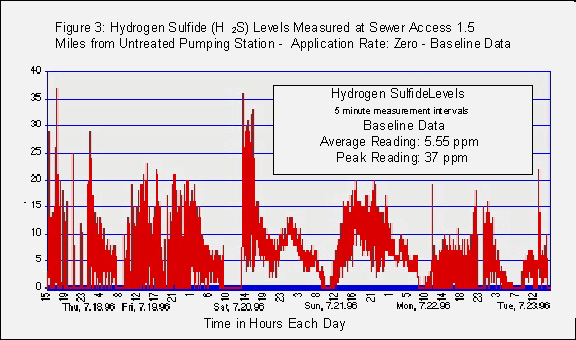
Figure 2: Hydrogen sulfide readings for an application rate of 250,000:1. Hydrogen sulfide release was reduced in this condition from the baseline average of 5.55 ppm and a peak of 37 ppm to an average of 1.42 ppm with a peak of
16 ppm.
This study demonstrates that Petrozyme can effectively reduce hydrogen sulfide release from anaerobic digestion under conditions of low concentrations and minimal retention time.
B: Petrochemical Bioremediation
Petrozyme is higly effective in biodegrading hydrocarbons in the field. The following graphs illustrate the effectiveness of Petrozyme in the clean-up of petrochemical contaminated sites:
1. Southern Pacific Railroad - Galveston, Texas
2. Newspaper Company - Sacramento, CA
3. Southern Pacific Railroad - Kansas City, Missouri
4. Marine Terminal - Los Angeles, CA
5. Oil Refinery - New Orleans, LA
6. Crude oil - Kuwait
7. Diesel Storage Tank - Fairfield, CA
8. Power Plant - Karnak, CA
Conclusion
Our constant need for petrochemicals necessitate a requirement for their disposal. The most cost-effective and efficient means is through biodegradation and their conversion by biological processes to simple inorganic molecules. The highly evolved bacterial and enzyme processing systems in Petrozyme offer considerable potential for the bioremediation of a diverse range of hazardous waste.
Graphs - Figures 3 - 10
1. Southern Pacific Railroad - Galveston Site
Accelerated biodegradation of soil contaminated with Diesel, Oil/Grease, PCP's, and Polynuclear Aromatic Compounds (Creosotes) at a railroad creosoting facility in Texas (Figure 3). Contaminant distribution in approximately 10,000 yds3 of soil.
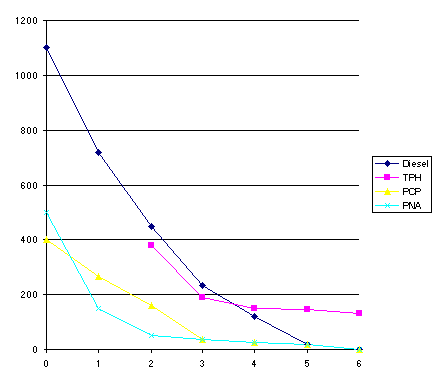
Figure 3: Biodegradation of contaminated soil with Petrozyme over a period
of 6 weeks - Southern Pacific Railroad, Galveston, Texas
2. Kerosene and Diesel at Sacramento Site
Accelerated biodegradation of soil contaminated with Kerosene and Diesel from tank removals at a newspaper Sacramento, California. Contaminant distribution in approximately 5,000 yds3 of soil.
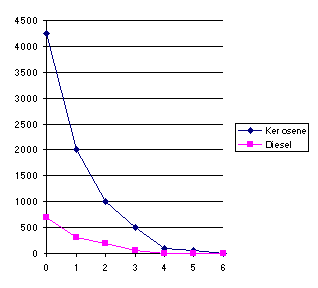
Figure 4: Petrozyme biodegradation of Kerosene and Diesel contaminated soil - Sacramento, California
3. Southern Pacific Railroad - Kansas City Site
Accelerated biodegradation of soil contaminated with Bunker C heavy fuel oil at a railroad facility in Kansas City, Missouri (Figure 3). Contaminant distribution in approximately 100,000 yds3 with initial contaminant levels above 250,000 ppm.
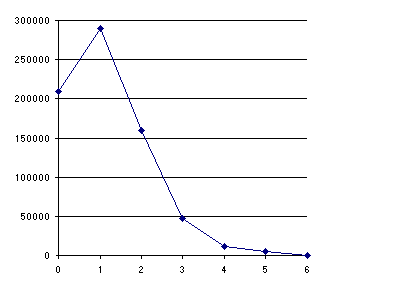
Figure 5. Enzyme biodegradation of Bunker C contaminated soil - Southern Pacific Railroad, Kansas City, Missouri
4. Marine Terminal - Los Angeles Site
Accelerated biodegradation of soil contaminated with Diesel, Oil/Grease, Ethyl Benzene, and Xylene at a Marine Terminal in Los Angeles, California (Figure 4). Contaminant distribution in approximately 30,000 yds3 of Saline soil/sand with initial Contaminant levels of approximately 30,000 ppm.
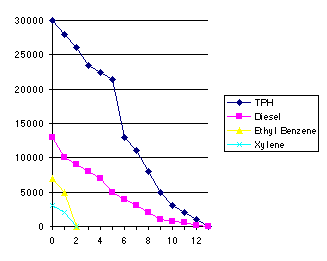
Figure 6. Petrozyme biodegradation of hydrocarbon waste
Marine Terminal. March - May, 1992) Los Angeles, California
5. Oil Refinery - New Orleans Site
Accelerated biodegradation of soil and liquid contaminated with Refinery Sludge in Louisiana. Contaminant distribution in approximately 100,000 yds3 of saline soil/sand with initial contaminant levels of approximately 30,000 ppm.
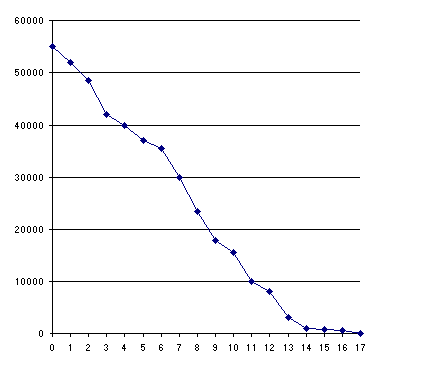
Figure 7: Petrozyme biodegradation of oil refinery sludge -
(February - May, 1992) Louisiana.
6. Crude Oil - Al Tameer Project, Kuwait
Accelerated biodegradation of sand contaminated with saline Crude Oil at the Al Tameer Project, Kuwait. Initial contaminant levels were approximately 90,000 ppm.
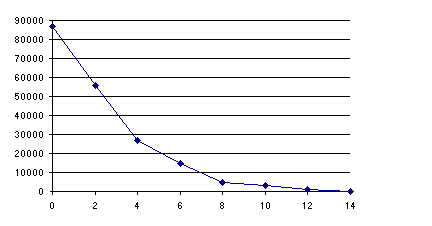
Figure 8: Petrozyme biodegradation of crude oil contaminated sand -
Al Tameer Project, Kuwait
7. Diesel Storage Tank - Fairfield Site
Accelerated biodegradation of Diesel contaminated soil from a tank removal in Fairfield, California. Contaminated distribution in approximately 500 yds3 of soil with initial contaminant level of approximately 1,800 ppm.
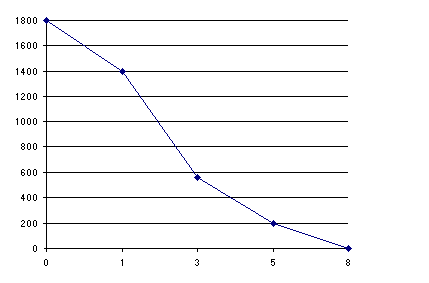
Figure 9: Petrozyme biodegradation of Diesel contaminated soil-
(April - May 1992) - Fairfield, California.
8. Power Plant - Karnak Site
Accelerated biodegradation of Diesel contaminated soil from a co-generation power plant at Karnak, California. Contaminant distribution in approximately 5000 yds3 of soil with initial contaminant level of approximately 3,800 ppm.
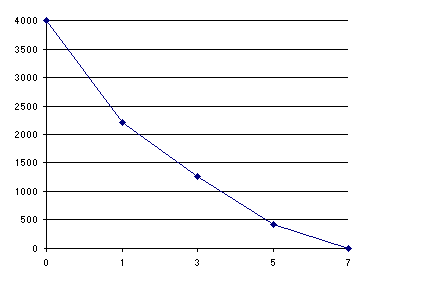
Figure 10: Petrozyme biodegradation of Diesel contaminated
soil—(May - June, 1989) Karnak, California